I never woke up one day and decided I wanted to powerlift. It’s been a few years of on and off, ups and downs. After my recent competition I thought I would share how I got to this point and tips for those curious to give it a go.
Reading Time: 8 minutes

Firstly, it’s important to say that I am still extremely new to the sport of powerlifting! It’s important to do your research and take advice from those far more experienced than myself. I did my first novice competition three years ago, and then recently competed in my first Powerlifting Australia powerlifting competition. I managed a 107.5kg squat, 55kg bench press and 147.5kg deadlift. A shoulder injury inhibited my bench press a bit, but I was happy with my results for squat and deadlift, which were both personal bests! While you can see a vlog of the day on my YouTube Channel, I wanted to cover how I came into powerlifting three years ago.
I first started lifting weights in the gym in 2014. I looked up free programs, watched YouTube videos on technique and dabbled in weights (while still doing quite a bit of cardio on the side). I was lucky enough that a PT at my gym called Tom was a powerlifter, and in 2015 he set started doing free group sessions, inviting anyone to come along and get some advice for the three lifts.

My form improved DRAMATICALLY when I started getting coaching. It was great to do it in a group environment and having the influence of strong people at the gym. In May 2016 there was a novice competition held in my city and myself and a couple of others signed up and decided to give it a go!
A novice competition still has the same format as a federated powerlifting competition but it is just run by the gym. The same rules for lifting apply, but I found the judging to be a little less strict. I could wear whatever T shirt, shorts and socks I liked. We weighed in in the morning, and were split into groups depending on our body weight. As with all powerlifting competitions, you are allowed three attempts for each lift. Your first attempt is a heavy weight you are confident with, and make your way up so your third attempt really challenges you. You get about 10 minutes to rest between each attempt, and then about 30 mins to rest between squat, bench and deadlift.
I had a great experience at that novice competition in 2016! Unfortunately, a week later I injured my knee and was unable to squat or deadlift for 6 months, so I didn’t do my next competition until August 2017.

I still didn’t consider myself a “real” powerlifter so this competition was once again a novice one for all girls (there were over 50 of us!). In the lead up to the competition, I did a specific program written by my online coach Chrissy Dask, and in addition had some technique help in person with Tom. On the day of the comp I was managed by both Chrissy (via message) and another PT in person. It was a bit challenging not having someone in person who knew me and my lifts, so I wouldn’t do this approach again.
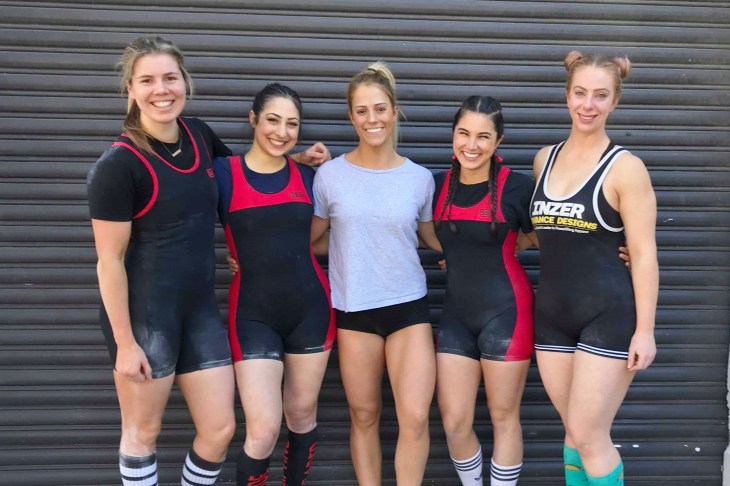
This year I signed up for my first proper powerlifting competition with Powerlifting Australia (PA) for two reasons; I could compete with Chrissy there to manage me, and compete alongside other girls she coaches in more of a “team” environment. I chose the competition a few months in advance, did a specific 12 week training program to prepare, and travelled to Sydney to compete in July 2018. The only real difference I noticed between the PA competition and the novice ones I’d done is I had to wear more specific apparel which had to be checked by the judges. In addition, as part of being a PA member you consent to being drug tested (but I’m not good enough for that!)
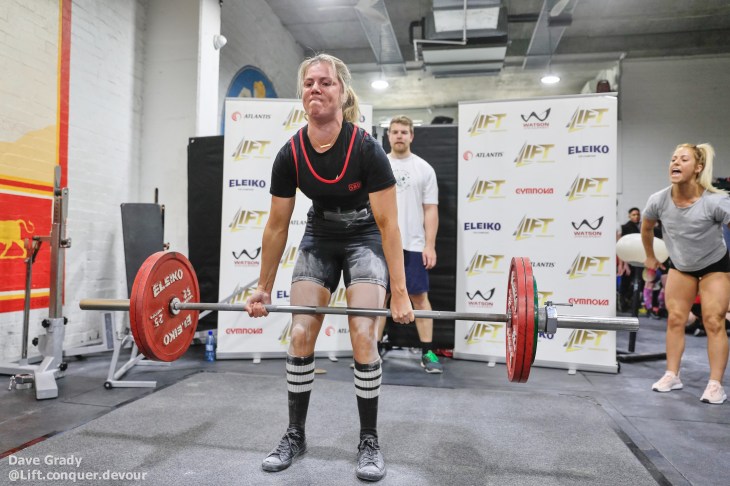
I had a great time at this competition and will definitely compete in another, but for now my priority is having a break for a few months to rehabilitate my shoulder injury and work on my mobility. Powerlifting does take a bit of a toll on the body and I want to look after myself before doing another probably at the end of 2018.
I am still very new to powerlifting, but as regular gal who isn’t a coach or professional athlete, I thought I might share some tips that I have learnt along the way for those who are interested in giving it a crack:
1. Research your area for powerlifting opportunities
- In the gym, you can usually spot powerlifters due to their big gym bags: belt, knee sleeves and maybe even different shoes and wrist wraps. Get chatting and ask them if they have a program and where they got it.
- Talk to staff at your gym about if any of them have experience with powerlifting or if they recommend someone who does
- Google powerlifting/strength gyms in your area.
- Google what powerlifting federations there are in your country and use that in order to…
- Stalk the SHIT out of people on Instagram. Search for hashtags of your countries federation or things like #[yourcity]powerlifting
- Email/direct message people that you come across from your country/city that powerlift. Ask them how they got started, who does their program, if they have any recommendations.
2. Get a powerlifting coach/PT who can help you with your technique and write you an individual program
- If you are completely new to lifting weights, it is essential to find someone who you can see one-on-one.
- If you are already lifting weights and understand the basic movement patterns I would still recommend seeing someone one-on-one, but you also have the option of getting an online coach who will allow you to send videos of you performing your lifts.
3. You don’t need all the gear
- Take advice from your coach, but don’t worry about investing in all the powerlifting gear initially. Belt, knee sleeves, wrist wraps etc – all that stuff will come in time but work with your coach to get the basic techniques downpat first.
4. Forget about your weight class
- Powerlifting does have certain weight classes, however I do not recommend trying to lose weight (or recklessly gain weight) to fit into a certain weight class. This is a new experience and your body will respond best if you are fuelling yourself adequately.
- That being said, if you do have concerns about your weight then I would suggest you speak to your coach and your doctor or a registered dietitian.
5. Watch a competition
- This goes hand in hand with googling powerlifting gyms in your area. Find out when a comp is on that you can go and watch, so you can see how it works on the day.
- Pay attention to the vibe on the day. Every powerlifting competition I have been to it has been an incredibly kind and encouraging environment. Everyone is made to feel welcome no matter the ability!
6. JUST DOOOO IT
- Once you have found an experienced coach/PT you are comfortable with, they will be able to individually advise you on what upcoming competition would be best for you.
- If you have the option to compete with someone else you know; a friend, another member of the gym, someone else your PT coaches; that can help to have that support (in addition to your coach) on the day.
- If you don’t feel “strong enough” or “ready” – know that you’re not alone. But you don’t compete to prove anything to anyone else except yourself. You’re there to give it a go, test your strengths, be proud, and then move towards bettering yourself.

 Em Wizz Fitness